 +86 17753100577
 manager@beflooring.com





EIR SPC Flooring: How Synchronized Wood Grain Texture Works
Ноябрь 7, 2026
Place two oak-look SPC flooring planks next to each other and the difference may not be obvious at first.
Both can have an attractive printed wood design. Both may use a matte finish and a textured wear surface.
But when light falls across the planks, one may look noticeably more natural.
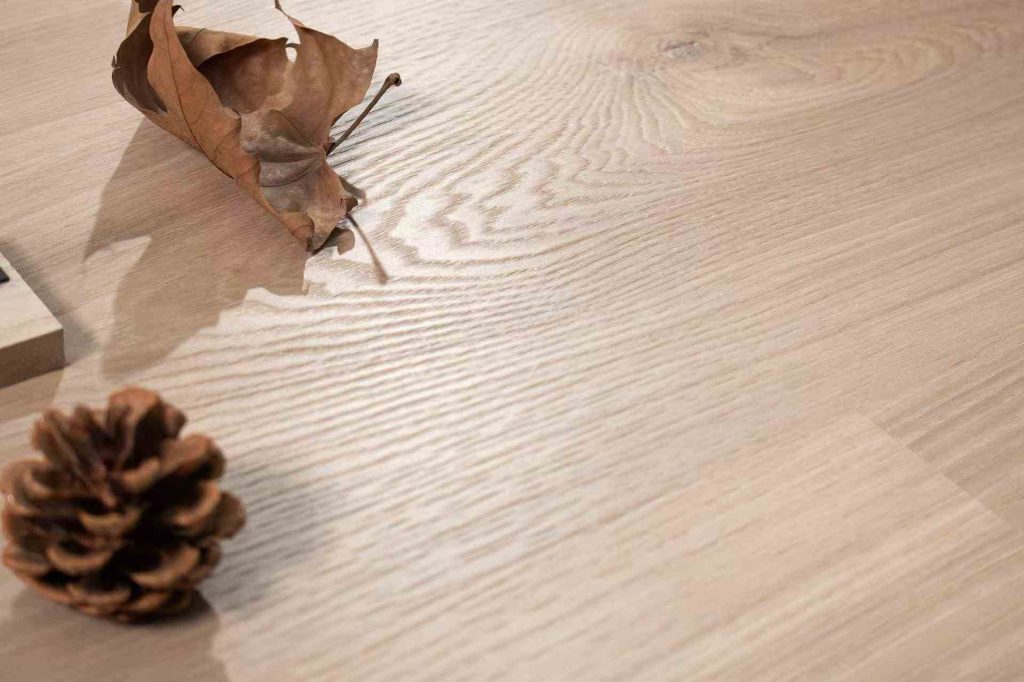
The reason is often the relationship between the printed grain and the embossed texture.
On a conventional textured SPC floor, the embossing does not necessarily follow the decorative wood pattern.
On EIR SPC flooring, the surface texture is registered to the printed design. Knots, grain lines and selected wood details are reproduced in corresponding positions.
For importers developing a premium collection, that difference deserves a closer look.
What does EIR mean in SPC flooring?
EIR stands for Embossed in Register.
It describes a surface where the embossed texture is synchronized with the printed decorative pattern.
Imagine a printed oak knot on a flooring plank.
With EIR technology, the embossed surface is designed so that the texture corresponds to the shape and position of that knot.
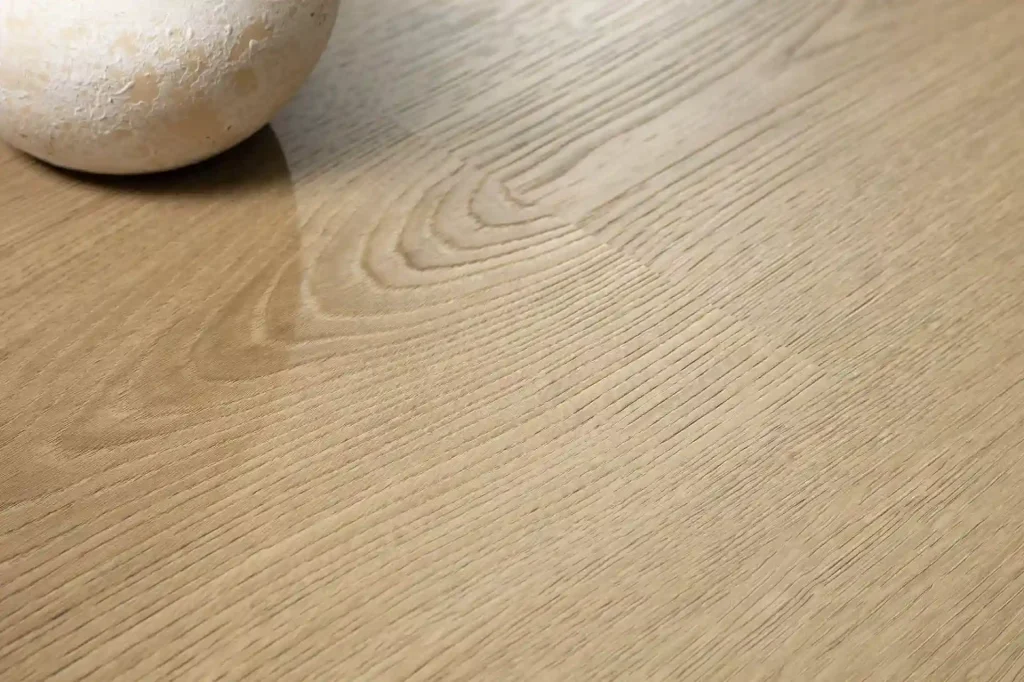
Selected grain lines can also have matching physical texture.
The result is a closer relationship between what the customer sees and what they feel.
This is different from ordinary embossing, where a general texture can be applied across the plank without matching each decorative feature.
Both types can produce attractive SPC flooring, but their visual effects are different.
Why EIR looks more like real wood
Natural wood has a complicated surface.
Grain lines change direction, knots interrupt the pattern and pores create small variations in texture.
A printed image can reproduce the color and appearance of those details, but it cannot reproduce their physical texture by itself.
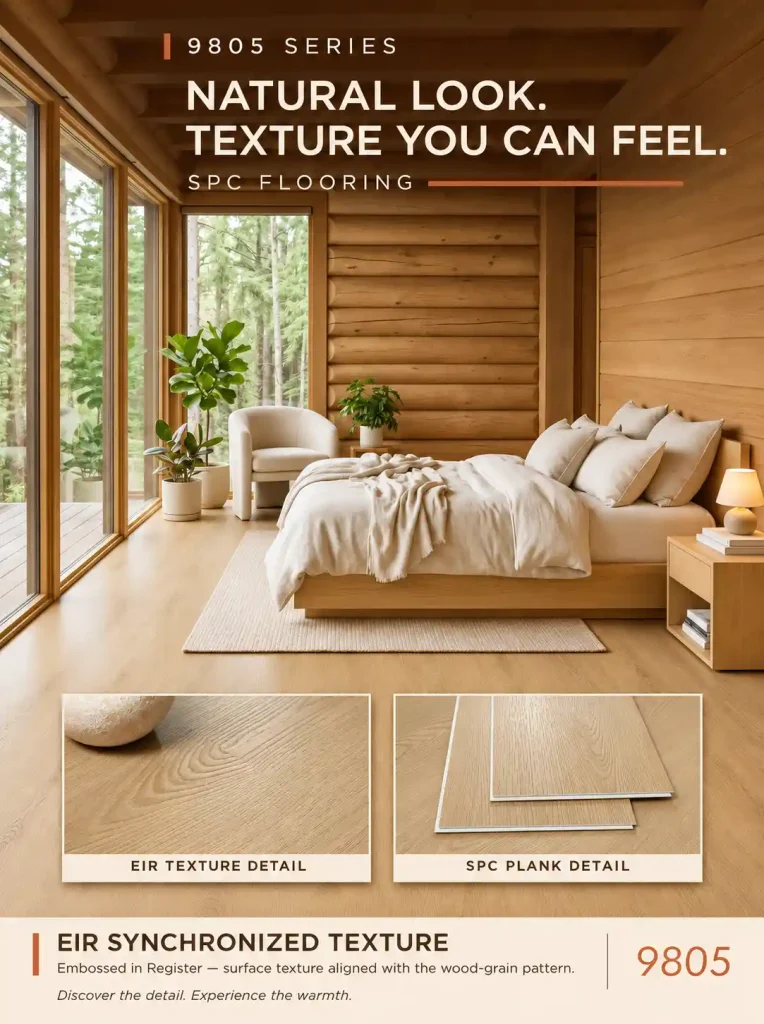
EIR adds another element.
When the embossed surface follows the visible grain, the design becomes more convincing from certain viewing angles.
Side lighting makes this easier to notice because small surface shadows reveal the embossing.
The effect can be particularly appealing in oak designs with visible knots and long grain patterns.
For showrooms, this gives sales teams something customers can both see and touch.
How EIR SPC flooring is manufactured
Producing a synchronized surface requires the decorative design and the embossing process to work together.
The manufacturing process begins with a defined wood pattern and tooling or texturing equipment prepared to reproduce corresponding surface details.
During production, the printed design and embossed texture need to remain aligned.
The exact equipment and processing stages vary with the manufacturing technology.
Different production systems may use specific lamination or texturing methods to create the final registered surface.
The important technical requirement is maintaining the relationship between the printed decoration and the physical embossing.
If the registration shifts, a visible wood knot may no longer match its textured detail.
The flooring can still look attractive, but the synchronized effect becomes less accurate.
This is why registration control is an important part of EIR production.
Deep embossing is not necessarily EIR
One of the easiest mistakes when buying textured SPC flooring is assuming that a deeper surface automatically means EIR.
It does not.
A plank can have a strongly embossed surface with no precise relationship to the printed wood design.
EIR refers to the alignment of texture and decoration.
When examining a sample, locate a prominent printed knot.
Look at the embossed detail around it and check whether the physical texture corresponds to the visible shape.
Then examine several grain lines in other areas of the plank.
The synchronization should be apparent across multiple features, not just one small section.
This simple visual check is useful when comparing samples, although formal manufacturing controls are still needed to evaluate registration accuracy consistently.
Does EIR improve SPC flooring durability?
Not by itself.
EIR is primarily a surface appearance and texture technology.
Wear resistance depends on the protective wear layer, surface coating and tested performance of the actual product.
An SPC EIR floor with a 0.3mm wear layer is not automatically more wear-resistant than a standard textured SPC floor with a 0.5mm wear layer.
Likewise, the presence of EIR does not establish better dimensional stability or stronger locking joints.
These characteristics need to be evaluated separately.
For importers, a properly specified EIR collection should combine the desired appearance with an appropriate core construction, wear layer and installation system.
The surface design is one part of the complete flooring product.
Which wood designs work well with EIR?
Wood patterns with clearly defined details often show synchronized embossing particularly well.
Natural oak is a common choice because its knots, pores and directional grain provide recognizable features.
Rustic oak can create a more pronounced visual effect, especially when the decorative pattern contains stronger contrasts.
Warm wood tones and matte finishes can also work well with EIR surfaces.
However, the strongest embossing is not necessarily the best option for every design.
Some collections require a softer texture.
Others benefit from more pronounced grain detail.
For distributors, the choice should reflect the appearance customers expect from the product.
It is worth checking samples in natural light and under typical showroom lighting before approving a collection.
Surface gloss changes the appearance
The level of surface gloss influences how customers perceive a wood design.
When light falls across an embossed floor, the texture creates highlights and shadows.
A matte finish may give the wood pattern a more restrained appearance.
A higher-gloss finish can reflect more light and change how the embossed details appear.
Neither finish is universally better.
The appropriate choice depends on the wood design, the intended interior style and local market preferences.
For a private-label SPC flooring collection, it is useful to approve both the decorative color and the surface finish.
Two planks using the same printed wood pattern can look noticeably different when their gloss levels change.
What importers should inspect on EIR SPC samples
When comparing EIR flooring suppliers, start with the synchronization of the texture and printed design.
Then check the full product construction.
Important details include:
- Plank and rigid core thickness.
- Wear layer specification.
- Dimensional stability.
- Click-lock joint accuracy.
- Surface finish consistency.
- Available IXPE backing.
- Decorative color consistency.
- Packaging and labeling.
Request more than one plank where possible.
Wood-look collections may deliberately contain several different decorative patterns, but the embossed texture should maintain the required registration quality.
For repeat orders, approved reference samples are useful.
They help the manufacturer and distributor agree on the expected color, texture and surface finish.
Is EIR SPC flooring suitable for wholesale distribution?
EIR can be a useful choice when a distributor wants to differentiate a collection from standard wood-look SPC flooring.
Its strongest advantage appears when customers can examine the product physically.
Online images are useful for introducing colors, but they cannot fully reproduce the tactile quality of the surface.
In a showroom, a customer can look at the wood grain under different lighting conditions and feel how the texture follows the design.
For importers building a private-label brand, EIR can support a more distinctive product range.
The technical configuration must still match the intended application.
A good-looking EIR floor with an unsuitable core or weak locking joint will not provide a successful long-term product.
How to compare EIR SPC flooring quotations
Not every product described as EIR will necessarily have the same visual quality.
Before comparing prices, request physical samples and complete specifications.
Check the registration between the printed grain and the embossed surface.
Confirm the wear layer, plank thickness, locking system, backing and packaging.
For OEM collections, agree on the approved color and texture samples before production.
It is also worth asking how the supplier checks surface consistency during manufacturing.
A lower quotation is not necessarily a better purchase if the delivered texture does not match the agreed sample.
Developing a distinctive SPC EIR collection
EIR works best when its benefits are demonstrated through real product details rather than exaggerated advertising.
Close-up photographs of grain lines, images taken under side lighting and full-size showroom samples can communicate the difference clearly.
For importers and distributors, choosing commercially suitable colors remains just as important as choosing the surface technology.
A focused collection with consistent texture and reliable technical specifications can be easier to sell than a large range of unrelated designs.
We offer SPC flooring with EIR synchronized wood-grain surfaces, different wear layer specifications and OEM packaging options for importers and wholesalers.
If you are developing an EIR SPC flooring range, ask about our available wood designs and the 9801 series. Samples and FOB quotations can be prepared according to your target specifications and destination market.