 +86 17753100577
 manager@beflooring.com




Is Laminate or Wood Flooring Better? A Practical 2025 Buyer’s Guide to 7 Key Factors
December 1, 2025
Abstract
The decision between laminate and wood flooring presents a significant choice for property owners, reflecting a complex interplay of aesthetics, functionality, and economic considerations. This analysis examines the fundamental distinctions between these two popular flooring options in the 2025 market. Solid hardwood, milled directly from timber, offers unparalleled authenticity and the potential for a multi-generational lifespan through refinishing. Its primary vulnerabilities lie in its susceptibility to moisture and its higher initial cost. Laminate flooring, a multi-layered synthetic product, consists of a high-density fiberboard (HDF) core, a photographic image layer, and a protective wear layer. It excels in durability, scratch resistance, and cost-effectiveness. Historically sensitive to moisture, recent technological advancements have produced high-quality waterproof laminate flooring, significantly narrowing the performance gap in wet areas. This exploration offers a comparative investigation of their material composition, durability metrics, water resistance capabilities, aesthetic potential, installation complexities, overall cost-value proposition, and long-term maintenance requirements to provide a clear framework for selecting the appropriate flooring based on specific application needs and personal values.
Key Takeaways
- Evaluate your home’s moisture levels; waterproof laminate excels in kitchens and bathrooms.
- Consider foot traffic; laminate’s wear layer offers superior scratch resistance for busy homes.
- For long-term value and refinishing options, solid hardwood remains a premium choice.
- The question of is laminate or wood flooring better often comes down to your budget and lifestyle.
- DIY enthusiasts will find laminate’s click-lock installation systems more approachable.
- Examine the high-definition imaging on modern laminates for realistic wood aesthetics.
Table of Contents
- A Comparative Overview: Laminate vs. Wood Flooring
- Factor 1: Composition and Material Science – The Core of the Matter
- Factor 2: Durability and Lifespan – A Test of Time
- Factor 3: Water and Moisture Resistance – The Achilles’ Heel?
- Factor 4: Aesthetics and Authenticity – The Look and Feel
- Factor 5: Installation – From Professional Craft to DIY-Friendly
- Factor 6: Cost and Value Proposition – An Economic Analysis
- Factor 7: Maintenance and Upkeep – The Daily Reality
- Frequently Asked Questions (FAQ)
- Conclusion
- References
A Comparative Overview: Laminate vs. Wood Flooring
Before we delve into the intricate details that separate these two flooring titans, it can be helpful to visualize their core differences at a glance. Think of this table not as a final verdict, but as a map to guide our deeper exploration. It lays out the primary territories of comparison we will be venturing into, providing a foundational understanding of where each material typically excels. The nuances and exceptions, which are often the most interesting part of the story, will be uncovered in the subsequent sections. This initial framework helps in organizing our thoughts as we tackle the central question: is laminate or wood flooring better for your specific circumstances?
| Feature | Solid Hardwood Flooring | High-Quality Laminate Flooring |
|---|---|---|
| Core Material | 100% solid wood (e.g., Oak, Maple, Cherry) | High-Density Fiberboard (HDF) made from wood byproducts |
| Water Resistance | Poor; susceptible to warping, cupping, and staining | Good to Excellent; water-resistant and waterproof options available |
| Durability | Varies by wood species (Janka scale); can dent and scratch | Excellent; highly resistant to scratches, dents, and fading (AC rating) |
| Lifespan | 50-100+ years; can be sanded and refinished multiple times | 15-30 years; cannot be refinished |
| Aesthetics | Unique, natural grain in every plank; authentic look and feel | High-resolution photographic layer; can mimic any wood or stone |
| Repair | Individual boards can be replaced; scratches can be refinished | Damaged planks must be replaced; cannot be sanded |
| Installation | Complex; typically requires professional nailing or gluing | DIY-friendly; usually installed as a “floating” click-lock floor |
| Upfront Cost | High; significant investment in materials and labor | Low to Moderate; very budget-friendly |
| Maintenance | Requires specific wood cleaners; sensitive to humidity | Easy; regular sweeping and damp mopping is sufficient |
| Resale Value | Generally increases home value significantly | Considered a durable, practical upgrade but with less impact than wood |
Factor 1: Composition and Material Science – The Core of the Matter
To truly understand the debate of whether laminate or wood flooring is better, we must first journey into the very essence of what these materials are. Their performance, their character, and their limitations are all born from their fundamental composition. It is not merely a choice between “real” and “imitation,” but a choice between two distinct engineering philosophies, each with its own history and purpose. One is a direct gift from nature, shaped and finished by human hands; the other is a testament to human ingenuity, layering different materials to create a functional and aesthetic whole.
The Soul of Wood: Solid and Engineered Hardwood
When we speak of “wood flooring,” we are typically referring to solid hardwood. Imagine a single, solid piece of timber, such as oak or walnut, milled into a plank. That is the simple, profound reality of a solid hardwood floor. Its entire thickness, usually around ¾ of an inch (19 mm), is that same species of wood. This gives it an unmistakable integrity and a structural depth. The grain pattern you see on the surface is not a picture; it is the tree’s life story, written in its fibers, and it continues all the way through the plank . This is why it can be sanded down and refinished multiple times over its very long life—each sanding reveals a fresh, untouched layer of that same wood.
There is also a close cousin called engineered hardwood. It is important not to confuse this with laminate. Engineered hardwood still features a top layer of real, solid wood—the part you see and touch. However, beneath this “veneer” of premium wood, the core is constructed from multiple layers of plywood or high-density fiberboard, crisscrossed for stability. This structure makes engineered wood more resistant to changes in temperature and humidity than solid wood, allowing it to be installed in places where solid wood might struggle, such as basements or over concrete slabs. It retains the authentic surface of real wood but with an engineered core designed for stability.
The Anatomy of Laminate: A Multi-Layered Marvel
Laminate flooring, in contrast, is a composite, synthetic product. It is a fusion of several layers, each with a specific job, all laminated together under high heat and pressure. The process is a marvel of modern manufacturing, designed to produce a floor that is both durable and beautiful. Let us dissect a typical plank from top to bottom.
The Wear Layer: This is the topmost, transparent layer. It is a tough, clear coating usually made of aluminum oxide. Its sole purpose is to protect the floor from the daily assaults of life: scratches from pet claws, fading from sunlight, stains from spills, and the general wear of foot traffic. The quality of this layer is one of the biggest determinants of the floor’s lifespan.
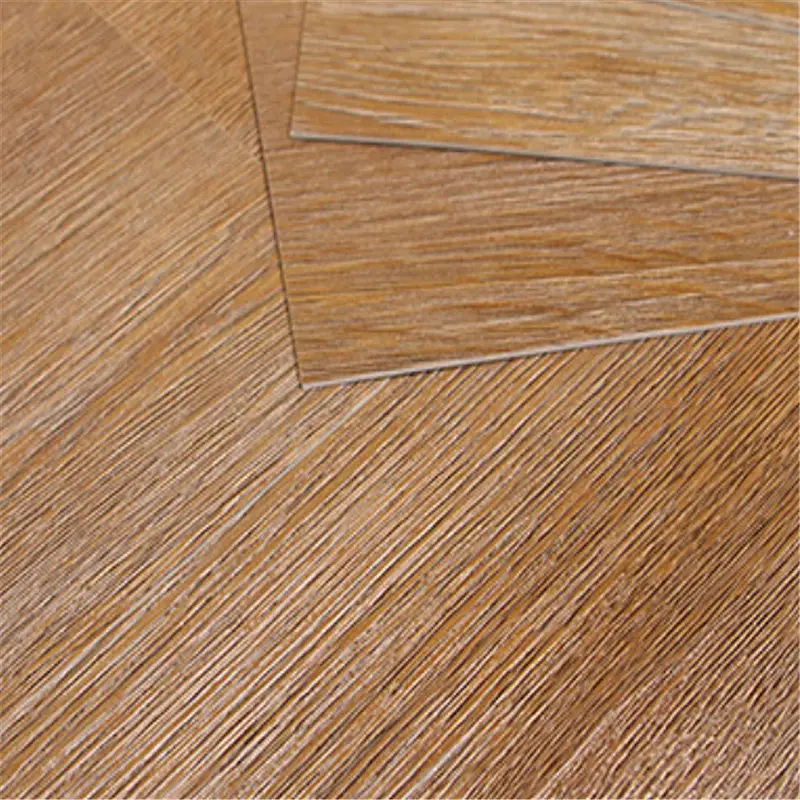
The Design Layer: Just beneath the wear layer lies the aesthetic heart of the product. This is a high-resolution photograph of a material, most often wood, but it can also be stone, ceramic tile, or abstract patterns. Advances in printing technology have made this layer incredibly realistic. The best laminates use sophisticated techniques to avoid pattern repetition, so the floor looks more natural and less like a repeating print.
The Core Layer: This is the backbone of the plank, providing its structure, stability, and impact resistance. It is almost always made of High-Density Fiberboard (HDF), which is created by breaking down wood residuals into fibers, mixing them with resin, and compressing them under immense pressure. HDF is what gives laminate its strength and resistance to dents. The complex four-layer structure of flooring wood laminate is a testament to its engineered resilience (Beflooring, 2025).
The Backing Layer: The final, bottom layer is the stabilizer. This melamine or paper layer provides structural stability and acts as a moisture barrier, protecting the plank from moisture that might come up from the subfloor. It ensures the plank remains flat and balanced, preventing it from warping or bowing over time .
Understanding this fundamental difference in construction is the first step in resolving for yourself whether laminate or wood flooring is better. One is a single, organic material; the other is a layered, engineered system.
Factor 2: Durability and Lifespan – A Test of Time
When you install a new floor, you are making a commitment. You expect it to withstand the rigors of your life and to last for a reasonable amount of time. The concepts of durability and lifespan are central to the question of whether laminate or wood flooring is better. However, they are not the same thing. Durability refers to how well a floor resists day-to-day damage like scratches, dents, and fading. Lifespan refers to the total number of years you can expect the floor to be in service. The two materials approach these challenges in fundamentally different ways.
Hardwood’s Resilience and Refinishing Potential
The durability of solid hardwood is largely dependent on the species of wood itself. This is measured scientifically by the Janka hardness test, which measures the force required to embed a 0.444-inch steel ball halfway into a piece of wood. The resulting Janka rating gives you a good idea of how well a particular wood will resist denting and wear. For example, Brazilian Walnut has a very high rating (around 3680), making it extremely durable, while a softer wood like Douglas Fir (around 660) will dent much more easily. Oak, a popular choice, sits comfortably in the middle (around 1290-1360).
However, regardless of the Janka rating, all wood can scratch. A dog’s claws, a dragged piece of furniture, or a dropped object can and will leave its mark on a hardwood floor. This is part of its character for some, a sign of a life well-lived in the home. For others, it is a source of frustration.
The true magic of hardwood lies in its lifespan. Because it is solid wood all the way through, a scratched and worn floor is not a ruined floor. It can be sanded down, removing the top layer of damaged wood and finish, to reveal a pristine, new surface underneath. After sanding, it can be stained and sealed again, looking brand new. A typical solid hardwood floor can be sanded and refinished 4 to 6 times in its life. With each refinishing lasting 10-20 years, the total lifespan of a hardwood floor can easily exceed 100 years. It is not just a floor; it is a feature of the home that can last for generations. This is a powerful argument for those who are deciding if laminate or wood flooring is better based on long-term investment.
Laminate’s Protective Wear Layer and Core Strength
Laminate flooring takes a completely different approach to durability. Its resilience does not come from the inherent hardness of a natural material, but from the technological prowess of its top wear layer. As mentioned, this aluminum oxide coating is one of the hardest and most durable materials used in residential flooring. It provides exceptional resistance to scratches, scuffs, and fading from UV light.
The durability of a laminate floor is officially graded using an Abrasion Class (AC) rating. This system, ranging from AC1 to AC6, was developed to test a laminate’s resistance to abrasion, impact, stains, and even cigarette burns.
- AC1: Suitable for very light residential use, like a bedroom.
- AC2: For general residential use, like living rooms or dining rooms.
- AC3: Good for heavy residential use (kitchens, hallways) and light commercial use.
- AC4: Suitable for general commercial use, such as offices or cafes.
- AC5: Designed for heavy commercial use, like department stores or public buildings.
- AC6: For extreme industrial use.
For most homes, a laminate with an AC3 or AC4 rating offers more than enough durability to handle pets, children, and heavy foot traffic with ease. It is significantly more scratch-resistant than most hardwood floors. Furthermore, the dense HDF core provides excellent impact resistance, making it less likely to dent from a dropped object compared to a softer wood.
The trade-off for this incredible surface durability is laminate’s lifespan and repairability. Once that tough wear layer is compromised—if a very deep scratch or gouge penetrates it—it cannot be repaired. You cannot sand down a laminate floor because the image layer is just beneath the surface. A deeply damaged plank must be replaced, which can be difficult depending on where it is located on the floor. The typical lifespan of a laminate floor is between 15 and 30 years, after which it will need to be replaced entirely. So, when considering if laminate or wood flooring is better, you must weigh laminate’s superior daily durability against wood’s potential for renewal and much longer total lifespan.
Factor 3: Water and Moisture Resistance – The Achilles’ Heel?
Water is the universal solvent and the enemy of many building materials. For flooring, its presence can be catastrophic. The ability of a floor to handle spills, moisture, and high humidity is a critical factor in the decision-making process, especially for rooms like kitchens, bathrooms, and basements. Historically, this is the area where the distinction between wood and laminate was most stark, though technology is rapidly changing the landscape.
Wood’s Natural Vulnerability to Liquids
Wood is a hygroscopic material, which means it naturally absorbs and releases moisture from the air to stay in equilibrium with its environment. This is a remnant of its life as a living tree. When a solid wood plank absorbs excess moisture—from a spill, high humidity, or a leak—its fibers swell. This can cause the planks to “cup” (the edges rise higher than the center) or “crown” (the center bulges). If the exposure is prolonged, it can lead to rot, mold, and permanent discoloration.
Even small amounts of water left to sit on a hardwood floor can seep between the planks and into the wood itself, leaving dark stains and damaging the finish. This is why solid hardwood is almost never recommended for full bathrooms and is considered a risky choice for kitchens or basements without excellent ventilation and climate control.
Engineered hardwood, with its cross-layered core, is more dimensionally stable than solid wood and can handle moderate fluctuations in humidity better. However, its top layer is still real wood, and its core is still made of wood products. It is more water-resistant than solid wood, but it is by no means waterproof. A significant spill or leak will still cause damage. For those living in humid climates like Southeast Asia or coastal regions, this inherent vulnerability is a major factor when deliberating if laminate or wood flooring is better.
The Rise of Waterproof Laminate Flooring
For decades, laminate flooring shared wood’s vulnerability to water. While the surface was resistant, the core was made of HDF—a wood product. If water seeped through the seams between planks, it would be absorbed by the core, causing it to swell, bubble, and delaminate. The edges of the planks would swell up, a phenomenon known as “peaking,” and the damage was irreversible. This was laminate’s Achilles’ heel.
However, the past decade has seen a revolution in laminate technology. Manufacturers have focused intensely on solving the water problem, leading to the creation of waterproof laminate flooring. This is not just a marketing term; it represents a fundamental re-engineering of the product. Several key innovations make this possible:
- Advanced Core Materials: While still HDF-based, the resins and binders used are now far more water-resistant. Some premium products even use cores with enhanced moisture-repelling properties.
- Edge Sealants: Manufacturers apply water-repellent coatings to the edges and locking systems of each plank. This creates a barrier that prevents water from penetrating the most vulnerable part of the floor—the seams.
- Tight Locking Systems: The precision of modern click-lock mechanisms creates an incredibly tight fit between planks, leaving virtually no gap for surface water to seep through.
When properly installed, a floor made of waterproof laminate can handle topical spills and moisture for extended periods, often up to 24 or even 72 hours, without any damage. This makes it a viable and excellent option for kitchens, laundry rooms, and even half-baths. It is important to distinguish this from older, “water-resistant” laminates. A truly waterproof product offers peace of mind that was previously unattainable with either laminate or wood. This technological leap has profoundly shifted the calculus for anyone asking, “Is laminate or wood flooring better?” It has given laminate a functional advantage in the very areas where wood is weakest (beflooring.com).
Factor 4: Aesthetics and Authenticity – The Look and Feel
A floor is one of the largest visual elements in any room. Its color, texture, and pattern set the stage for the entire design. The aesthetic dimension of the choice between laminate and wood is deeply personal and often emotional. It touches on our ideas of authenticity, nature, and technological representation. This is not just about what looks good; it is about what feels right for your home and your sense of style.
The Unmistakable Authenticity of Real Wood
The appeal of solid hardwood is timeless and visceral. Each plank is unique. The grain patterns, the knots, and the subtle variations in color are the authentic signature of the tree from which it came. No two planks are ever identical. This creates a floor with a depth, warmth, and character that cannot be perfectly replicated. Running your hand over a real wood floor, you can feel the subtle textures of the grain. It has a certain solidity and warmth underfoot that manufactured products struggle to match.
Furthermore, wood ages. Over time, it develops a patina, a gentle wearing and mellowing of the color that adds to its character. Many people see minor scratches and dents not as flaws, but as part of the home’s story. Wood flooring connects a living space to the natural world in a very direct way. The choice of species—the classic warmth of Oak, the rich darkness of Walnut, the pale elegance of Maple—allows for a wide range of design expressions, all grounded in the organic beauty of the material itself. For many, the answer to “is laminate or wood flooring better?” is settled on this point alone. The authenticity of real wood is a value that transcends practical comparison.
Laminate’s High-Definition Realism and Variety
If wood’s strength is its authenticity, laminate’s is its versatility and technological prowess. The aesthetic quality of laminate flooring has improved dramatically in recent years, closing the visual gap with real wood significantly. This is due to several key advancements:
- High-Definition Printing: The photographic layer is now printed with such high resolution that it can capture the most subtle details of a premium piece of wood, including its grain, saw marks, and mineral streaks.
- Embossing in Register (EIR): This is a game-changing technology. EIR is a manufacturing process that aligns the surface texture of the plank with the underlying photographic image. This means if you see a knot in the picture, you can feel a corresponding texture in the same spot. This creates a level of realism that tricks both the eye and the hand, moving laminate from a “flat picture” of wood to a three-dimensional tactile experience.
- Wider and Longer Planks: Mimicking high-end hardwood trends, laminate is now available in wider and longer formats, which can make a room feel larger and more luxurious.
- Reduced Pattern Repetition: Advanced manufacturing techniques use multiple unique plank images, so the eye does not easily pick up on a repeating pattern, which was a common giveaway of older, cheaper laminates.
The result is a product that can look strikingly similar to real wood from a normal standing distance. While a connoisseur might still be able to tell the difference upon close inspection, modern high-quality laminate offers a convincing and beautiful alternative.
Beyond realism, laminate’s greatest aesthetic strength is its sheer variety. Because the design is a photograph, it can be anything. Do you love the look of a rare, exotic hardwood that would be prohibitively expensive or ecologically irresponsible to source? Laminate can replicate it perfectly. Do you want the look of Italian slate, polished concrete, or intricate ceramic tile without the cold feel and difficult installation? Laminate can provide it. This endless variety gives designers and homeowners an enormous palette to work with, unconstrained by the limitations of a natural material. This is a powerful counterargument in the debate over whether laminate or wood flooring is better.
Factor 5: Installation – From Professional Craft to DIY-Friendly
The process of getting the flooring from the box onto your subfloor is a significant part of the overall project, impacting both the cost and the timeline. The installation methods for wood and laminate are worlds apart, reflecting their different compositions. One requires skill, specialized tools, and often professional expertise, while the other was designed from the ground up to be accessible to the determined do-it-yourselfer.
The Demands of Hardwood Installation
Installing solid hardwood flooring is a craft. The most common method is nail-down, where a special flooring nailer is used to drive cleats or staples through the tongue of each plank at an angle, securing it to a wooden subfloor (like plywood or OSB). This requires precision to ensure the planks are tight, straight, and properly spaced to allow for seasonal expansion.
If the subfloor is concrete, the wood must be glued down using a powerful adhesive. This method is messy and unforgiving; once a plank is down, repositioning it is extremely difficult.
Before any of this can happen, the wood itself must be brought into the house and left to acclimate for several days, sometimes even a week or more. This allows the moisture content of the wood to equalize with the home’s environment, preventing excessive expansion or contraction after installation. The subfloor must also be perfectly clean, flat, and dry. Any imperfections can telegraph through to the finished floor, causing squeaks or gaps.
Because of the specialized tools, the need for precision, and the unforgiving nature of the materials, installing solid hardwood is almost always a job for experienced professionals . The labor costs for installation can add a significant percentage to the total project budget. This complexity is a definite consideration when weighing if laminate or wood flooring is better for your project’s scope and budget.
The Simplicity of Laminate’s Click-Lock Systems
Laminate flooring, by contrast, was engineered for easy installation. The vast majority of modern laminate floors are installed as a “floating floor.” This means the planks are not attached to the subfloor at all. Instead, they are joined to each other using an ingenious tongue-and-groove system, often called “click-lock” or “fold-and-lock.”
The process is straightforward. A thin foam or felt underlayment is rolled out over the subfloor to provide cushioning, sound absorption, and a minor moisture barrier. Then, starting along one wall, the planks are clicked together, row by row. The end of one plank locks into the end of another, and the long side of one row locks into the long side of the previous row. The entire floor rests on the underlayment, held in place by its own weight and friction, with a small expansion gap left around the perimeter of the room (which is later covered by baseboards or quarter-round molding).
This method has several advantages:
- DIY-Friendly: With a few basic tools (a saw, a tapping block, a pull bar), a handy homeowner can achieve professional-looking results.
- Speed: A room can often be completed in a single day.
- Forgiving: It can be installed over almost any existing hard surface floor (like vinyl or tile) as long as it is flat, saving the cost and mess of demolition.
- No Acclimation Time: Laminate is far more stable than wood and typically requires little to no acclimation period.
- Easy Repairs: If a plank in the middle of the floor gets damaged, it is possible (though sometimes tedious) to “un-click” the floor back to the damaged piece, replace it, and then re-install the planks.
This simplicity and accessibility make laminate a very attractive option, tipping the scales for many who are asking, “Is laminate or wood flooring better for a weekend project?”
Factor 6: Cost and Value Proposition – An Economic Analysis
For most people, the budget is a primary driver of any home improvement decision. The financial aspect of the laminate versus wood question is not just about the initial price tag; it involves a deeper consideration of installation costs, long-term value, and potential impact on your home’s resale price. Examining the full economic picture is essential to making a choice you will be happy with for years to come.
The Initial Investment and Long-Term Value of Wood
There is no getting around it: solid hardwood flooring is a significant financial investment. It is one of the most expensive flooring options on the market. The cost is influenced by several factors:
- Wood Species: Common domestic woods like Red Oak or Maple are the most affordable. More exotic or rarer species like Brazilian Cherry, Teak, or Tigerwood can be several times more expensive.
- Plank Width and Thickness: Wider and thicker planks generally cost more per square foot.
- Grade of Wood: Wood is graded based on its appearance. “Clear” or “Select” grade has a uniform color and minimal knots, making it the most expensive. “Rustic” or “Cabin” grade has more character—knots, mineral streaks, and color variation—and is more budget-friendly.
- Finish: Prefinished hardwood from the factory often costs slightly more for materials but can save on labor costs compared to site-finished wood.
In addition to the material costs, you must factor in the high cost of professional installation, which can sometimes be as much as the material itself.
However, the high upfront cost is balanced by an excellent long-term value proposition. A well-maintained hardwood floor can last for the life of the house. Because it can be refinished multiple times, it does not need to be replaced every few decades. Furthermore, hardwood flooring is highly desirable to homebuyers. Real estate studies consistently show that homes with hardwood floors tend to sell faster and for a higher price than comparable homes without them. It is an investment that not only provides daily enjoyment but also adds tangible, recoverable value to your property.
Laminate’s Affordability and Return on Investment
Laminate flooring’s primary economic advantage is its affordability. Both the material itself and the installation are significantly less expensive than hardwood. High-quality waterproof laminate flooring can often be purchased and installed for less than half the price of a mid-range hardwood floor. This makes it possible to achieve a high-end wood look on a much tighter budget.
The cost of laminate is generally determined by its thickness (thicker planks often cost more), its AC rating (higher durability costs more), and the quality of its design layer (features like EIR add to the price). Even the most premium, technologically advanced laminate flooring is still considerably cheaper than most solid hardwood options.
The lower installation cost is also a major factor. The DIY-friendly nature of click-lock systems means homeowners can potentially eliminate labor costs entirely. Even if you hire a professional, the speed and simplicity of installing a floating floor mean the labor charges will be far lower than for a nail-down or glue-down hardwood installation.
In terms of resale value, laminate occupies a middle ground. It is seen by buyers as a clean, durable, and modern surface. It is certainly more appealing than old, worn-out carpet. However, it does not carry the same prestige or command the same premium as genuine hardwood. It is a practical upgrade that improves the look and function of a home, but it is not typically seen as a major value-adding investment in the same way wood is. When deciding if laminate or wood flooring is better, you must weigh the immediate budget relief of laminate against the long-term equity-building potential of wood.
Below is a table illustrating a potential cost scenario for a 200-square-foot (approximately 18.6 square meters) room. These are estimates and will vary widely based on location, specific product choices, and labor rates.
| Cost Component | Mid-Range Solid Oak Hardwood | High-Quality Waterproof Laminate |
|---|---|---|
| Material Cost | $8 – $12 per sq. ft. ($1,600 – $2,400) | $3 – $5 per sq. ft. ($600 – $1,000) |
| Underlayment/Supplies | $100 – $200 | $100 – $150 |
| Professional Installation | $5 – $10 per sq. ft. ($1,000 – $2,000) | $2 – $4 per sq. ft. ($400 – $800) |
| Total Professional Cost | $2,700 – $4,600 | $1,100 – $1,950 |
| Total DIY Cost (Materials Only) | Not Recommended | $700 – $1,150 |
| Long-Term Cost (25 years) | 1 Refinishing: ~$600 – $1,000 | Potential Full Replacement: $1,100 – $1,950 |
Factor 7: Maintenance and Upkeep – The Daily Reality
The beauty and longevity of any floor depend heavily on how you care for it. The daily and weekly cleaning routines, as well as long-term upkeep requirements, are practical realities that will be part of your life for years. The maintenance philosophies for wood and laminate are quite different, one requiring a gentle, specific touch and the other prizing simple, straightforward cleaning.
Caring for a Living Material: Wood Flooring
Maintaining a hardwood floor is about protecting a natural, organic material. The key is to be gentle and to control its environment.
- Cleaning: The best approach is frequent dry cleaning. Use a soft-bristle broom or a dust mop with a microfiber head to remove grit and dust that can act like sandpaper and scratch the finish. For a deeper clean, use a vacuum cleaner with a bare floor setting or a soft brush attachment (never a beater bar, which can dent the wood). When mopping is necessary, it must be done with extreme care. Use a cleaning solution specifically formulated for hardwood floors and a well-wrung-out microfiber mop. The goal is a “damp” mop, not a wet one. Never pour water or cleaner directly onto the floor.
- Protection: Place doormats at all exterior entrances to trap dirt, grit, and moisture. Use felt pads on the bottom of all furniture legs to prevent scratches when they are moved. Lift furniture when moving it; do not drag it. Be mindful of pet claws and keep them trimmed.
- Spills: Wipe up any spills immediately with a soft, dry cloth. Water is the enemy, and the longer it sits, the more likely it is to cause damage.
- Climate Control: Wood expands and contracts with changes in humidity. It is best to maintain a consistent indoor humidity level (typically 35-55%) year-round using a humidifier in the winter and a dehumidifier or air conditioning in the summer to prevent gapping or cupping.
This regimen might seem demanding, but for many owners, this careful stewardship is part of the pride of owning a genuine hardwood floor.
The Low-Maintenance Nature of Laminate
Laminate flooring was designed for modern, busy lifestyles, and its maintenance routine reflects that. Its non-porous surface and tough wear layer make it incredibly easy to care for.
- Cleaning: The routine is simple: sweep, dust mop, or vacuum regularly to remove loose dirt. For a more thorough cleaning, a damp mop is all that is needed. You can use a simple solution of water and a small amount of white vinegar, or any cleaner approved for laminate floors. Because even waterproof laminate flooring is only protected from topical water for a certain period, you should still avoid soaking the floor. A damp mop is sufficient. The sealed surface prevents dirt from penetrating, so most messes wipe away easily.
- Protection: While highly scratch-resistant, laminate is not scratch-proof. It is still a good idea to use felt pads under furniture and doormats at entrances. The main advantage is that you do not have to worry as much about minor scratches from daily life.
- Stains and Spills: Most spills, even tough ones like wine or marker, can be cleaned up easily with a damp cloth. For stubborn stains, a bit of rubbing alcohol on a cloth will often do the trick. The non-porous wear layer is highly stain-resistant.
The simplicity of this care routine is a major selling point. For families with kids and pets, or for anyone who wants a beautiful floor without a demanding cleaning regimen, the low-maintenance nature of laminate is a decisive factor in the “is laminate or wood flooring better” debate. You get a wood look without the wood-care worries. For those seeking durable and easy-to-maintain options, exploring products from high-quality laminate wood flooring solutions providers can offer a wide range of suitable choices.
Frequently Asked Questions (FAQ)
Can you install laminate flooring in a bathroom or kitchen?
Yes, but it is critical to choose the right product. You must select a laminate that is explicitly rated as “waterproof,” not just “water-resistant.” These products have water-repellent core materials and sealed edges designed to prevent water from penetrating the seams for a specified period (e.g., 24-72 hours). This makes them suitable for high-moisture areas like kitchens and half-baths. For a full bathroom with a shower or tub, extra precautions around the perimeter and fixtures are still recommended.
Which is more scratch-resistant, laminate or wood?
Laminate flooring is significantly more scratch-resistant than wood flooring. The aluminum oxide wear layer on laminate provides superior protection against scratches from pet claws, dragged furniture, and daily foot traffic. While very hard wood species exist, almost all wood is softer than a laminate wear layer and will scratch more easily.
Does laminate flooring look fake?
While older laminate products often looked artificial, modern high-quality laminate can be remarkably realistic. Technologies like high-definition printing and Embossing in Register (EIR), which matches the texture to the visual grain, create a look and feel that is very close to real wood. From a normal standing distance, it can be difficult to tell the difference.
Can you refinish a laminate floor?
No, you cannot refinish a laminate floor. The surface is a photographic image protected by a wear layer. Sanding it would destroy the image and the plank. If a laminate plank is deeply scratched, gouged, or damaged, it must be replaced. This is a key difference from solid hardwood, which can be sanded and refinished multiple times.
Which flooring adds more value to a home?
Solid hardwood flooring consistently adds more resale value to a home than laminate. It is seen by potential buyers as a premium, long-lasting feature. While high-quality laminate is a desirable and practical upgrade over carpet, it does not typically command the same increase in home value as genuine wood.
Is laminate flooring colder or louder than wood?
Laminate can feel slightly colder to the touch than wood because its dense core does not insulate as well. It can also be louder, producing a “clicking” sound when walked on, especially with hard-soled shoes. However, this can be greatly mitigated by using a high-quality underlayment. A good underlayment provides thermal insulation, making the floor feel warmer, and absorbs sound, making it much quieter.
What is an AC rating for laminate flooring?
The AC (Abrasion Class) rating measures a laminate floor’s durability. It ranges from AC1 (light residential use) to AC5/AC6 (heavy commercial use). For most homes, a rating of AC3 or AC4 is ideal, providing excellent durability for hallways, kitchens, and living areas with pets and children.
Conclusion
The journey through the worlds of laminate and wood flooring reveals that there is no single, universal answer to the question, “Is laminate or wood flooring better?” The “better” choice is not inherent in the material itself but is found in the intersection of the material’s properties and your own unique context—your lifestyle, your budget, your aesthetic values, and the specific demands of your home’s environment.
If your priorities are authenticity, long-term investment, and the timeless character of a natural material that can be renewed for generations, then solid hardwood remains the unparalleled choice. It is a commitment to a floor that lives and ages with you, adding tangible value and a deep sense of warmth to your home. It asks for more care and a higher initial investment, but it repays that with a lifespan that can be measured in decades, not years.
Conversely, if your values lean toward practicality, durability, and budgetary efficiency, modern laminate flooring presents an incredibly compelling case. It offers a stunningly realistic wood look without the associated anxieties about scratches, spills, or complex maintenance. The advent of high-quality waterproof laminate flooring has erased its most significant historical weakness, opening it up to every room in the house. It is a testament to technological innovation, providing a beautiful, resilient, and accessible flooring solution for busy, modern lives. It embodies a philosophy of achieving a desired aesthetic with superior functional performance and economic sense.
Ultimately, the choice is a reflection of what you ask from the surfaces you live on every day. Do you seek the organic soul of wood, or the engineered resilience of laminate? By understanding their core truths—from their material composition to their daily upkeep—you are now empowered to make an informed decision that is not just better, but better for you.
References
Beflooring. (2025, October 28). Laminate flooring vs vinyl: A practical 2025 buyer’s guide to 7 key differences. BeFlooring. https://beflooring.com/laminate-flooring-vs-vinyl-a-practical-2025-buyers-guide-to-7-key-differences-article/
Blueprint Joinery. (2019, June 18). A buyer’s guide to laminate wood flooring. https://www.blueprintjoinery.com/blog/laminate-wood-flooring-buyers-guide/
Carpet Mart. (2025, December 1). Laminate flooring and how to choose it.
Greenberg, S. (2024, June 30). Types of flooring made simple: The complete 2025 guide. FlooringStores. https://www.flooringstores.com/a/blog/types-of-flooring
Stark, K. E., & Krause, A. (2017). Effects of raw material and process parameters on the physical and mechanical properties of high-density fiberboards (HDF). European Journal of Wood and Wood Products, 75(4), 541–549.
United States Department of Agriculture. (n.d.). Wood handbook: Wood as an engineering material. Forest Products Laboratory. https://www.fpl.fs.usda.gov/documnts/fplgtr/fpl_gtr190.pdf
Weber, D. (2025, May 30). Laminate 101. Bob’s Carpet and Flooring.